

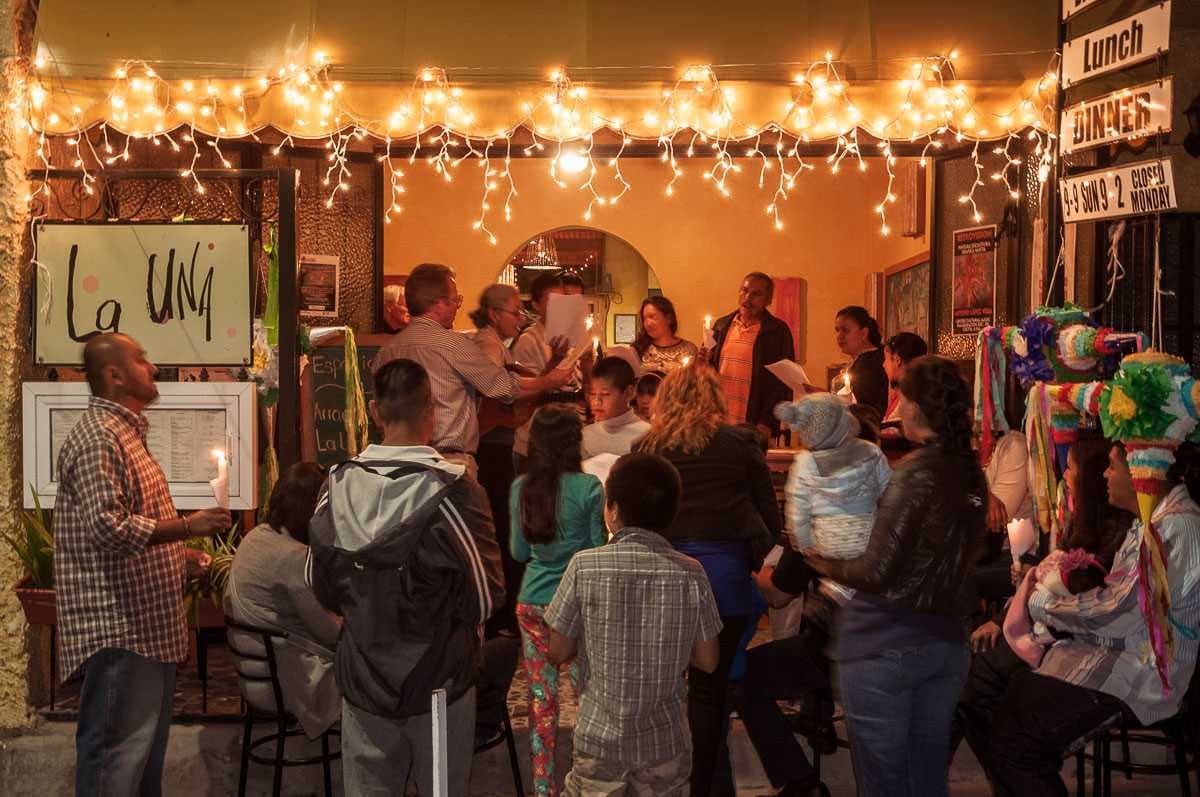
Nine days of processions, music, fireworks and fiestas cap off November for Ajijic's patron, Saint Andrew.
The Fiestas de San Andrés is a traditional nine-day novenario at the end of each November in Ajijic. From November 21 to 30, the faithful and the profane come together to celebrate with processions, fireworks castles, music, amusement rides and other festivities every night in the central plaza.
Towns in Mexico have a patron, a saint, and usually a patroness, too (one of the apparitions of the Virgin Mary. Ajijic’s patrona is the Virgin of the Rosary).
Each night of the novenario, officially November 22 to 30, is sponsored by a different family or group such as the albañiles (bricklayers/masons), jardineros (gardeners) or agricultores (farmers). On some nights, the plaza is packed shoulder to shoulder with over a thousand people, depending on which musical group is playing.
November 21 Procession
A procession kicks off the fiestas the evening before the official start, between 5:00 to 5:30 p.m. on November 21, which is also St. Cecilia’s feast day. Cecilia is the patron saint of musicians, so this day of sponsored by the town’s musicians.
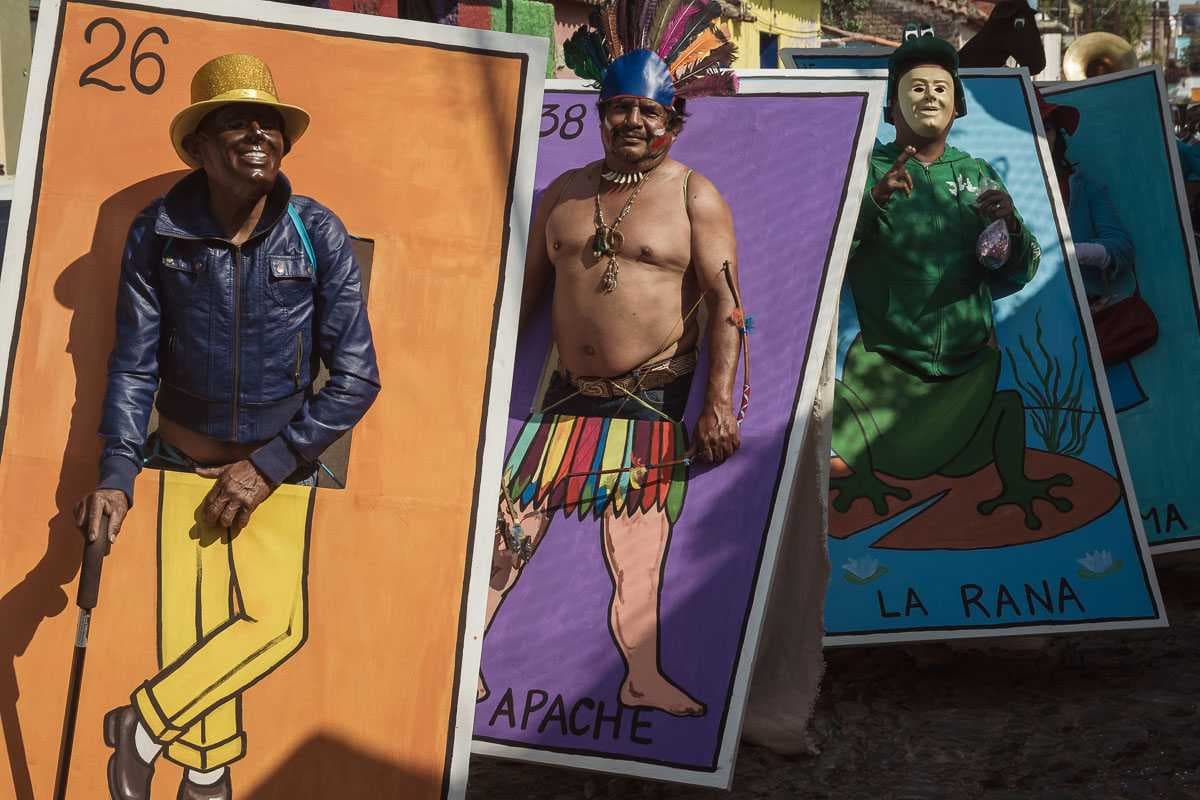
The November 21 procession features many carros alegóricios — moving floats with biblical scenes portrayed by still actors. Interspersed between the floats are bandas and Aztec dancers.
Noon and Nightly Processions
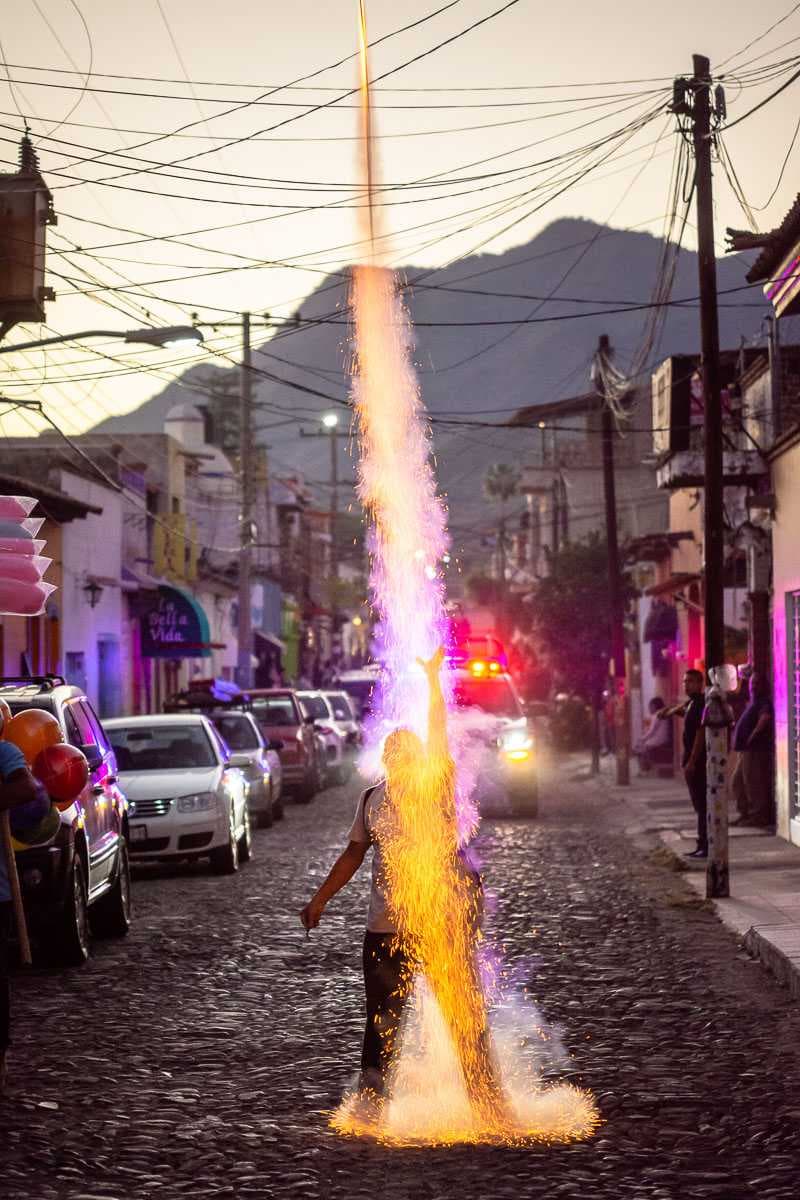
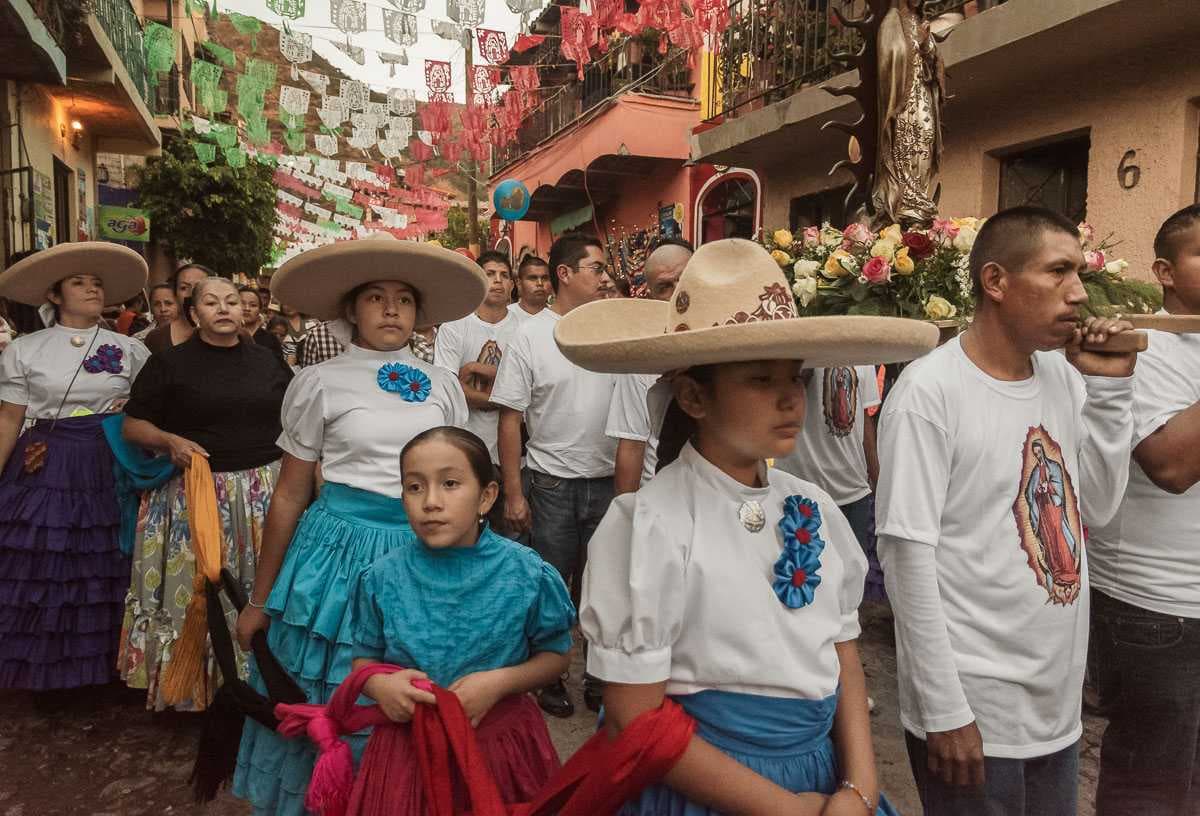
From November 22-30, processions start at 11:30 a.m. and 6:30 p.m. at Seís Esquinas, ending at church San Andrés in time for mass a half-hour later. The day’s sponsors and other parishioners walk to the church in a group led with a religious image and followed by a banda and couple of people who light cohetes, the rockets that go up a hundred feet and explode.
The 11:30 a.m. procession that usually takes place is small; the one in the evening has more people, who sometimes carry candles to the church. It starts at Ocampo and ends at Church San Andrés.
Fireworks Castles
Each night usually features a castillo — a fireworks castle two to four stories tall loaded with moving wooden parts, wheels, and shapes, which get propelled into motion when the attached fireworks are ignited.
On occasion, a night goes without a castillo, because a basic castillo can cost about a thousand bucks and as many as fifteen thousand dollars on the high end.
The size of the castles, and the intricacy of the designs, determine the amount of work involved and, therefore, the cost. The castles that get constructed during the afternoons outside of San Andrés Church are on the smaller end, reaching between 2-3 stories. Some of these are big enough for the workers to climb during the show, which they do to put out the burning wooden frame of the castillo or unjam a stuck moving part.
The castles are usually lit at 10:00 p.m. in the atrium of Ajijic’s big church, Church San Andrés, located near the plaza.
Check out this video of the castillo from the first night of the 2017 Fiestas de San Andrés. It shows a short section of the fireworks display with various parts of the castle being lit up in succession:
Once the main parts of the castillo have been ignited, the top part spins around quickly before being launched a couple hundred feet into the air:
Last updated: 2026-03-29
You might enjoy
Location
Ajijic
Promotion